
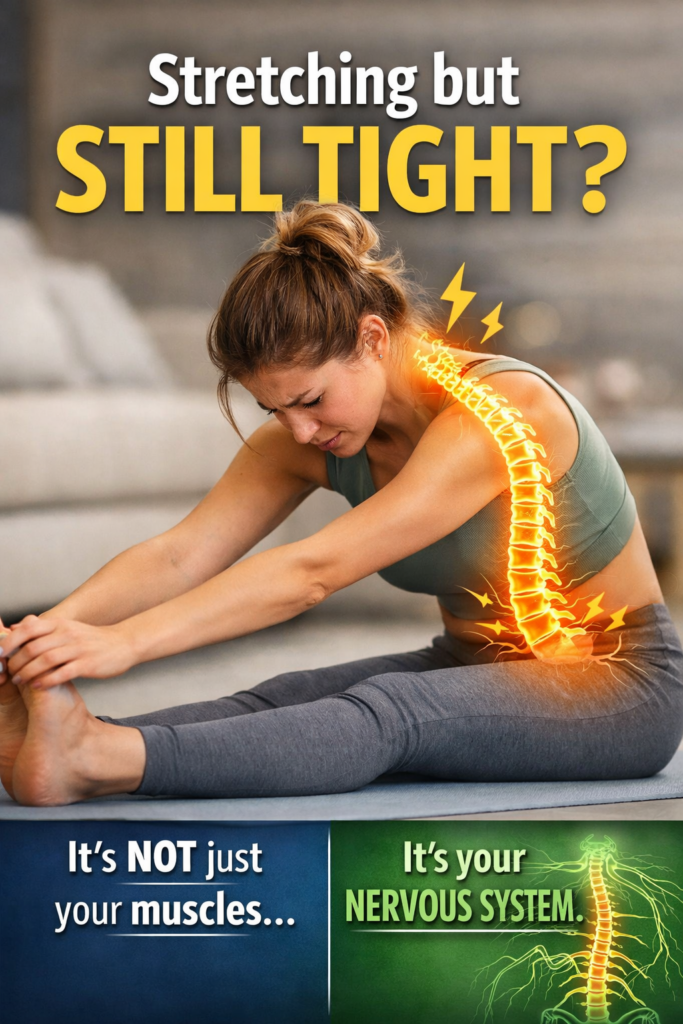
Have you ever felt like no matter how much stretching, exercising, or foam rolling you do, your body still feels tight?
Maybe it’s your hamstrings, your hips, your shoulders, or your neck. You stretch them, they feel better for a little while… but the tightness always seems to come back. Many people assume tight muscles mean they simply need more stretching. But what if the real reason your body feels tight isn’t actually your muscles at all?
Your nervous system is what controls every movement your body makes. It sends signals from your brain, down your spine, and out to your muscles telling them when to contract, when to relax, and how far to move.
When everything is working properly, your muscles work together smoothly and your body moves the way it should. But when the nervous system senses stress, poor posture, old injuries, or spinal imbalance, it can trigger protective muscle tension. Your body is essentially saying:
“Something isn’t right — let’s tighten up to protect it.”
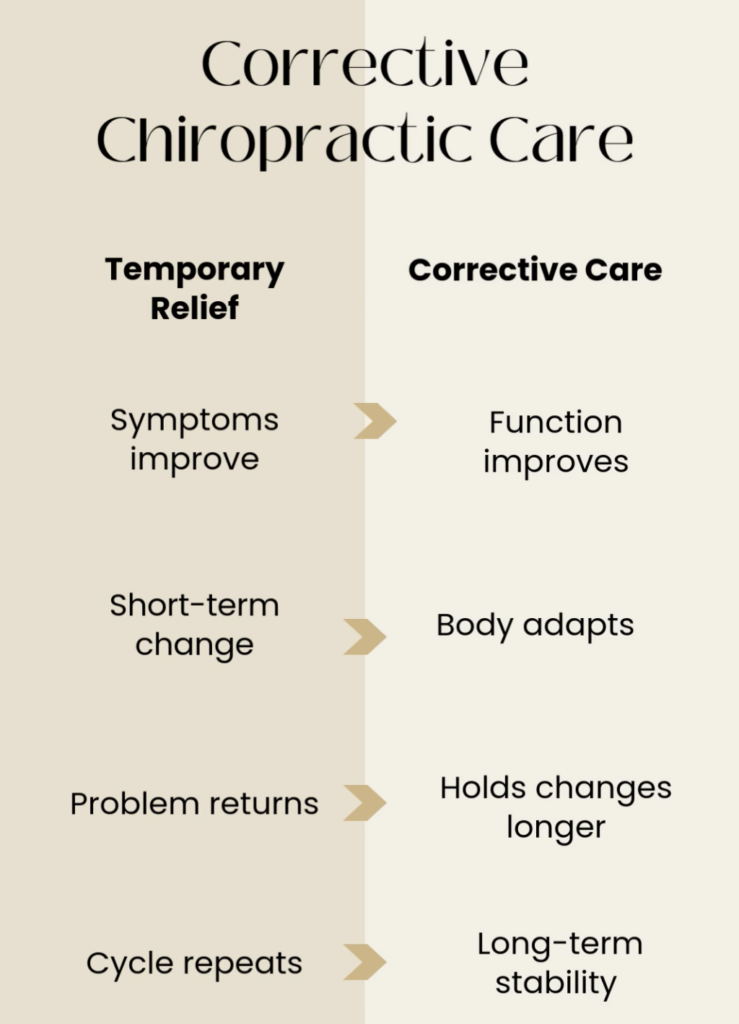
That’s why many people feel constantly tight even though they stretch regularly. The missing piece often isn’t more stretching or exercise — it’s making sure your spine and nervous system are functioning the way they should. Corrective chiropractic care focuses on restoring proper spinal alignment so your nervous system can communicate clearly with your muscles again. When that happens, your body can move more freely, recover better, and function the way it was designed to.
When the nervous system works better, your body works better.
And that’s when people start to notice improvements in flexibility, movement, and overall health.
Your Nervous System & Your Health
Did you know that only about 10% of your nervous system actually senses pain?
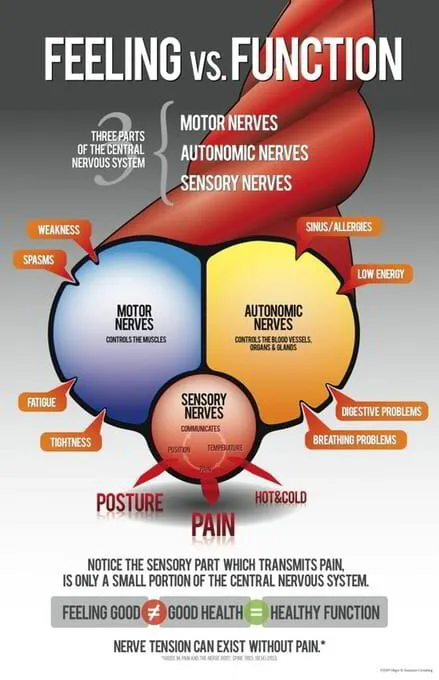
That means up to 90% of nerve interference can be happening in your body before you ever feel discomfort. Pain is often the last signal, not the first.
Your nervous system controls every function in your body—from how your muscles move, to how your organs work, to how your body heals and adapts to stress.
That’s why at our office we utilize a neurofunctional scan. This technology allows us to evaluate how your nervous system is functioning so we can identify areas of stress or imbalance before they turn into symptoms or injuries.
Many people judge their health based on how they feel in the moment, but true health is about how well your body is functioning every day.
Don’t wait for pain to tell you something is wrong.
Be proactive about your health and keep your nervous system balanced and functioning at its best.
Why to prioritize your regular chiropractic visits??
- Life places a lot of stress on our bodies—long hours sitting, repetitive movements, workouts, work stress, and daily activities can all take a toll on the spine and nervous system.Regular chiropractic care helps your body stay ahead of these stresses so you can continue doing the things you love.
Here are a few reasons consistent care matters:
- Prevent Repetitive Use Injuries: Daily habits like sitting at a desk, looking down at phones, or repetitive work movements can slowly build stress in the spine. Regular adjustments help reduce that buildup before it leads to injury.
- Combat the Effects of a Sedentary Lifestyle: Modern life often keeps us sitting more than moving. Chiropractic care helps restore motion, improve posture, and keep the nervous system communicating properly.
- Keep Your Nervous System Functioning at Its Best: Your nervous system controls every process in the body. When spinal stress interferes with nerve communication, your body cannot function at its full potential.
- Stay Consistent With Your Health: Let’s be honest—once people feel better, it’s easy to fall out of routine. But waiting until pain returns means the problem has often been building again for weeks or months.
Remember: pain is only about 10% of the nervous system. By the time you feel it, dysfunction may have already been developing for quite some time.
Corrective chiropractic adjustments help remove abnormal stress from the spine and nervous system, allowing your body to function, heal, and adapt the way it was designed to.
Recipe: Sheet Pan Broccoli Tortellini Bake

This is similar to a regular Blackstone meal I make that I had to share!
Ingredients:
- 1.5 lbs fresh broccoli cut into 1.5-inch uniform florets
- 3 cloves garlic minced
- 11 oz chicken sausage sliced into rounds, Italian-style preferred
- 16 oz frozen cheese tortellini
- 1 cup grated parmesan cheese about 4 oz, freshly grated preferred
- 6 tablespoons olive oil extra virgin preferred
- Salt and pepper to taste
- Red chili flakes optional
Instructions:
- Preheat your oven to 400°F (this takes about 10 minutes). While it heats, toss the broccoli florets with minced garlic, 2 tablespoons of olive oil, salt, and pepper directly on your sheet pan. Spread everything in a single layer.
- Roast the broccoli for 10 minutes until it turns bright green with lightly browned edges but still feels crisp when pierced with a fork. This initial roast develops incredible flavor through caramelization.
- Increase the oven temperature to 450°F and let it preheat while you prepare the mixture (about 3-5 minutes). Transfer the roasted broccoli to a large bowl and combine it with sliced chicken sausage, frozen tortellini, the remaining 4 tablespoons of olive oil, and half of your parmesan cheese (about 1/2 cup). Mix everything thoroughly.
- Wipe your sheet pan with olive oil or line with parchment paper, then spread the mixture evenly across the pan. Bake for 12-15 minutes until the cheese is melted and golden brown with crispy edges. If the tortellini looks dry halfway through, drizzle with 1-2 tablespoons of water.
- Sprinkle the remaining parmesan cheese on top right before serving.